🎾 Tape Balls, Hard Balls & Practice Balls
Cricket Balls in Pakistan
Tape balls from 64mm to 74mm in packs of 6 and 12, genuine leather hard balls and synthetic practice balls. From Rs. 600 with Cash on Delivery nationwide.
🎾 Tape Balls 64–74mm
🔴 Leather Hard Balls
📦 Packs of 6 & 12
💳 Cash on Delivery
Cricket Balls
Sort by:
Newest First
Best Rated
Most Bought
Price: Low to High
Price: High to Low
Cricket Balls at Safencia (11)
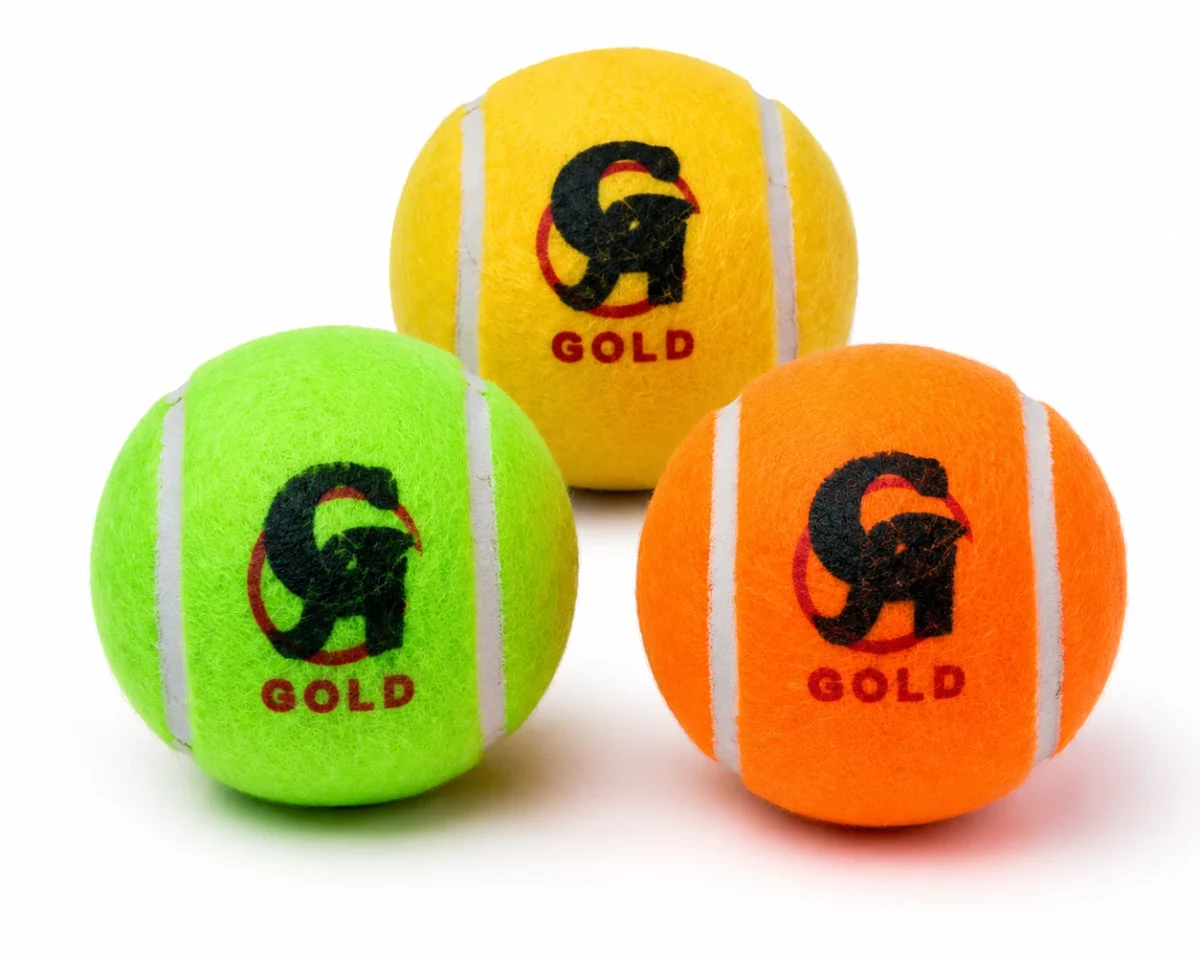
4-Piece Leather Cricket Hard Ball 156g in Red A hand-stitched genuine cowhide hard ball built from four quarter panels at the regulation 156g, for club cricket and serious practice. Kids Tennis Ball Regular Size (Pack of 6) in Yellow, Orange or Green Six regular size rubber tennis balls in yellow, orange or green, made for children playing street cricket indoors or out. Master White Synthetic Practice Cricket Balls (Pack of 6) Six Master white synthetic hard balls for training under floodlights or indoors, where a red ball disappears. Around 100g each, international size. Master Red Synthetic Practice Cricket Balls (Pack of 6) Six Master red synthetic hard balls built for cricket training. Around 100g each, lighter than a match ball, and far tougher than leather in the nets. T-20 Two Piece Leather Cricket Hard Ball 156g in Red A hand-stitched genuine cowhide hard ball at the standard 156g weight, two-piece stitched in red for club cricket, academy nets and local tournaments. Chamki Tennis Ball 64mm Double Colour (Pack of 12) for Kids Twelve small 64mm double-colour Chamki balls at just 40g each, the lightest ball we stock and the one to hand a young child learning cricket. CA Gold Tennis Ball (Pack of 6) in Green, Orange or Yellow Six CA Gold tape balls in green, orange or yellow, with extra tight pressure jointless rubber. The everyday CA ball for outdoor street cricket. CA Swing Tennis Ball 72mm (Pack of 6) in Yellow or White Six CA Swing 72mm tape balls with extra tight pressure jointless rubber, available in yellow, white or golden for day or floodlit cricket. Big Shot Untearable Foam Tennis Ball 68mm (Pack of 6) Six Big Shot 68mm balls built on a hard foam core instead of rubber, printed Untearable, made for kids playing street cricket indoors or out. Fine Gold Tennis Ball 68mm in Sealed Tin Tubes (6 Balls, 2 Tubes) Fine Gold 68mm tape balls packed three to a sealed ring-pull tube. Six balls across two tubes for Rs. 2,400, with jointless extra tight pressure rubber. Original Fine Gold Tennis Ball 74mm (Pack of 3, 6 or 12) for Tape Ball Cricket Large 74mm Original Fine Gold tape balls with extra tight pressure rubber and no joint, sold in packs of 3, 6 or 12 for tournament street cricket.
Buy Cricket Balls Online in Pakistan
There are three kinds of cricket ball on this page and they are not interchangeable. Tape balls are rubber or foam tennis balls, 40g to 100g, wrapped in electrical tape and hit in every street in the country. Leather hard balls are genuine cowhide around cork at the regulation 156g, for club and academy cricket with pads on. Synthetic practice balls sit in between: hard ball characteristics at around 100g, built to survive concrete nets rather than to play a match.
For tape balls the choice comes down to size and weight, and both matter more than the brand on the felt. A 64mm 40g Chamki is for a small child and will not carry off an adult's bat. A 74mm 70g Fine Gold is the biggest and heaviest we sell and carries across a full ground. In between sit the 68mm and 72mm balls at around Rs. 166 to Rs. 400 each. The CA Swing is the only ball we stock in white, which is what stays visible once the floodlights come on. The Big Shot is the only one with a foam core instead of rubber, so it cannot split.
On the hard balls, the number of leather panels is the thing to understand. A two-piece ball is two halves joined at the seam — ours is Rs. 600 and is what club cricketers and academies actually put in play. A four-piece uses four quarter panels, holds its roundness longer and keeps the seam standing proud for more overs; ours is Rs. 999. Buy the four-piece if you bowl seam. Packs of six and twelve are the norm for tape balls, and we show the per-ball price on each product so you can see when the bigger pack is actually cheaper.
How to choose a cricket ball
Tape ball size: 64mm and 40g (Chamki) for small children; 68mm to 72mm for normal street play; 74mm and 70g (Fine Gold) for the biggest, heaviest ball that carries on a slow outfield.Rubber or foam: rubber balls bounce more and carry further; the foam-core Big Shot is untearable, so it cannot split the way a rubber ball eventually does.Colour: yellow and orange for daylight on concrete; the white CA Swing for playing under floodlights, where a yellow ball loses contrast.Hard balls: two-piece leather at Rs. 600 for club and practice; four-piece at Rs. 999 if you bowl seam and want the ball to last; synthetic Master balls for concrete nets.
Cricket Balls Comparison Guide (Tape vs Leather in Pakistan)
Ball Type / Model
Core / Panels
Diameter & Weight
Visibility / Lighting
Best Used For
Price (PKR)
Chamki Tape Ball (12 Pack) Lightweight rubber
64mm / ~40g
Fluorescent bright
Young children & gentle play
Rs. 1,250 (Rs. 104/ball)
Kids Tennis Ball (6 Pack) Standard tennis core
68mm / ~55g
Yellow / Green
School & beginner street cricket
Rs. 999 (Rs. 166/ball)
CA Gold Tape Ball (12 Pack) Jointless rubber core
68mm / ~65g
Yellow / Orange
Everyday adult gali cricket
Rs. 2,200 (Rs. 183/ball)
Fine Gold Heavy (6 Pack) Heavy rubber core
74mm / ~70g
Yellow / Orange
Tournament tape ball & slow outfields
Rs. 1,600 (Rs. 267/ball)
CA Swing Tape Ball (6 Pack) Special swing felt
70mm / ~60g
White (Night match)
Floodlight night tournaments
Rs. 2,400 (Rs. 400/ball)
2-Piece Leather Hard Ball Genuine cowhide 2 halves
Regulation 156g
Red match shine
Club matches & nets practice
Rs. 600
4-Piece Leather Hard Ball Genuine cowhide 4 quarters
Regulation 156g
Red tournament finish
Seam bowling & long innings
Rs. 999
Master Synthetic Practice Hard moulded synthetic
~100g
Red / White
Concrete practice nets & wet turf
Rs. 1,199
Frequently Asked Questions
How much does a cricket ball cost in Pakistan?
Safencia cricket balls cost from Rs. 600 to Rs. 2,400. A two-piece leather hard ball is Rs. 600 and a four-piece is Rs. 999. Tape balls are sold in packs: twelve Chamki balls are Rs. 1,250 (about Rs. 104 each), and six CA Swing balls are Rs. 2,400 (Rs. 400 each).
What is a tape ball?
A tape ball is a rubber or foam tennis ball wrapped in electrical tape, used for street cricket across Pakistan. It weighs 40g to 100g against 156g for a leather ball, so it is safe to play with in a gali without pads, and it is far cheaper to replace.
What does 'without joint' mean on a tape ball?
It means the rubber core has no moulded seam running around it. Balls made in two halves are joined, and that join is usually where the ball eventually splits. A jointless ball has no such weak line, so it lasts longer under a bat.
Which tape ball is best for street cricket?
For adult street cricket the CA Gold at about Rs. 183 a ball is the everyday choice, and the 74mm Fine Gold at Rs. 267 is the heavy tournament option that carries furthest. For young children the 40g Chamki is far kinder at about Rs. 104 a ball.
Why would I buy a white cricket tennis ball?
Visibility after dark. Under floodlights or street lights a yellow ball loses contrast against the glare, while white stays sharp — the same reason limited-overs cricket uses a white ball. The CA Swing is the only ball we stock in white.
What is the difference between a 2 piece and a 4 piece leather cricket ball?
The number of leather panels. A two-piece is made from two halves joined at the seam; a four-piece uses four quarter panels, which hold the ball round for longer and keep the seam proud for more overs. Ours are Rs. 600 and Rs. 999 respectively.
Are the Master practice balls leather?
No, they are hard synthetic. That is deliberate: synthetic survives concrete nets and wet grass far better than leather, which scuffs and softens. At around 100g they are lighter than the 156g match weight, so they are training balls rather than match balls.
Do tape balls come in packs of 6 or 12?
Both, depending on the ball. Most are sold in sixes and twelves, and we list the per-ball price on each product page so you can see whether the twelve pack is genuinely better value — on some balls it is, on others the per-ball price is the same.
Explore Related Collections
Related collections